A Conversation
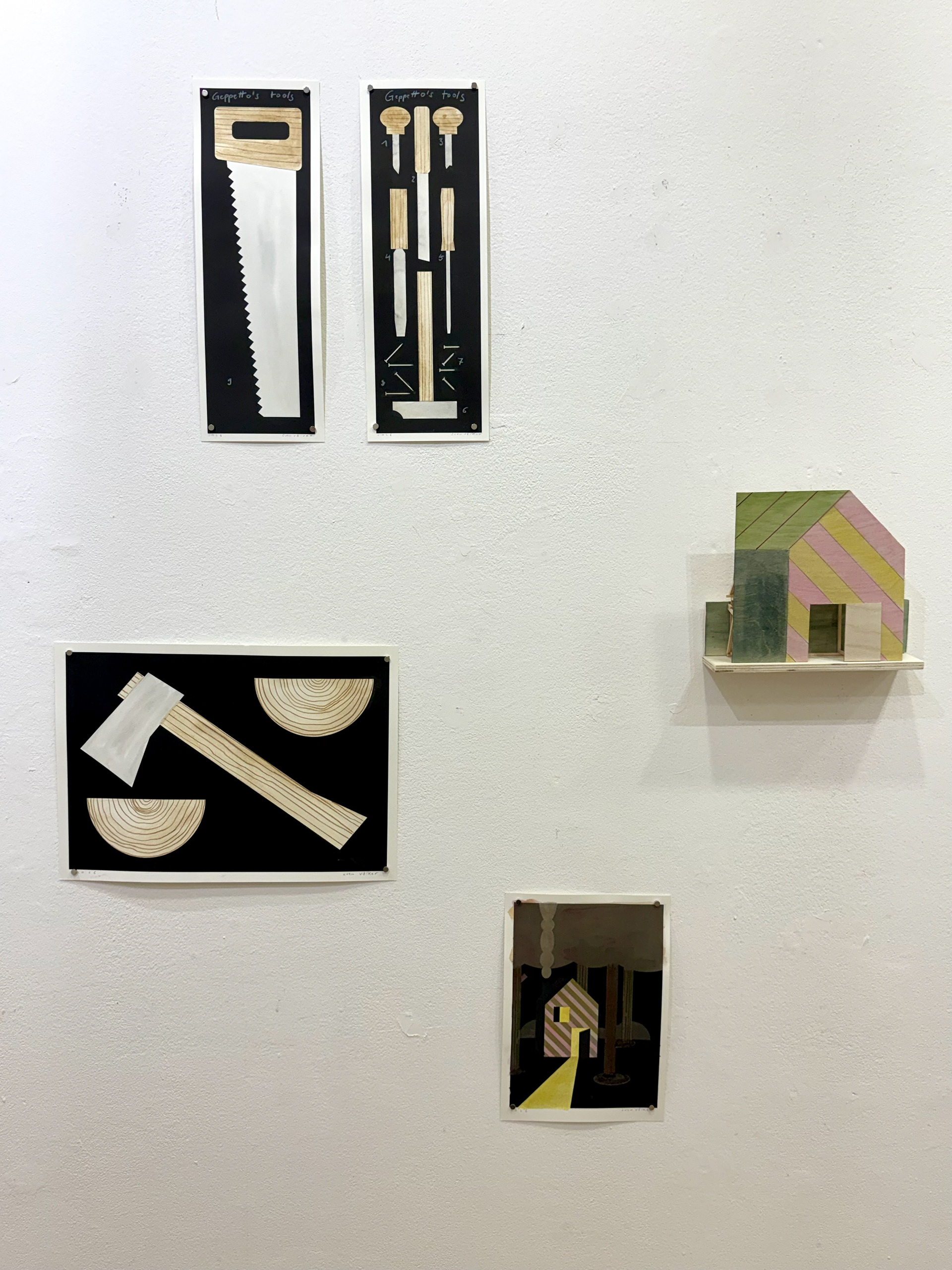
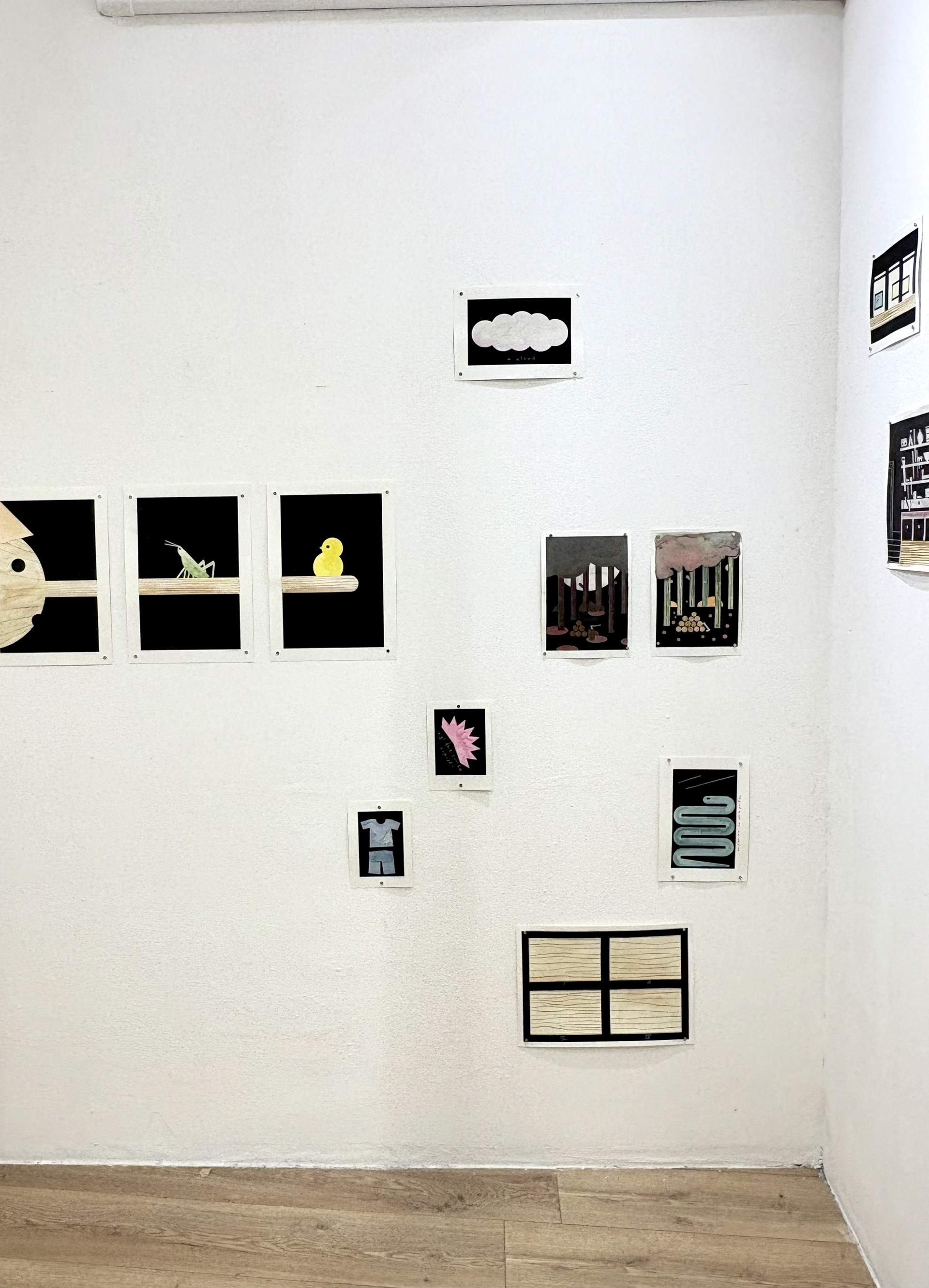
In his new picture book, Sven Völker has remixed Carlo Collodi’s original words and illustrated them in his minimalist yet poetic style. The story of a puppet who wants to become a real boy thus becomes a surprisingly contemporary tale and celebrates the Italian author’s 200th birthday in 2026. In an accompanying exhibition for the book at Big Eyes Gallery in Bologna during the International Children's Book Fair, the fairy-tale world of Pinocchio is brought to life through scenographic and sound installations.
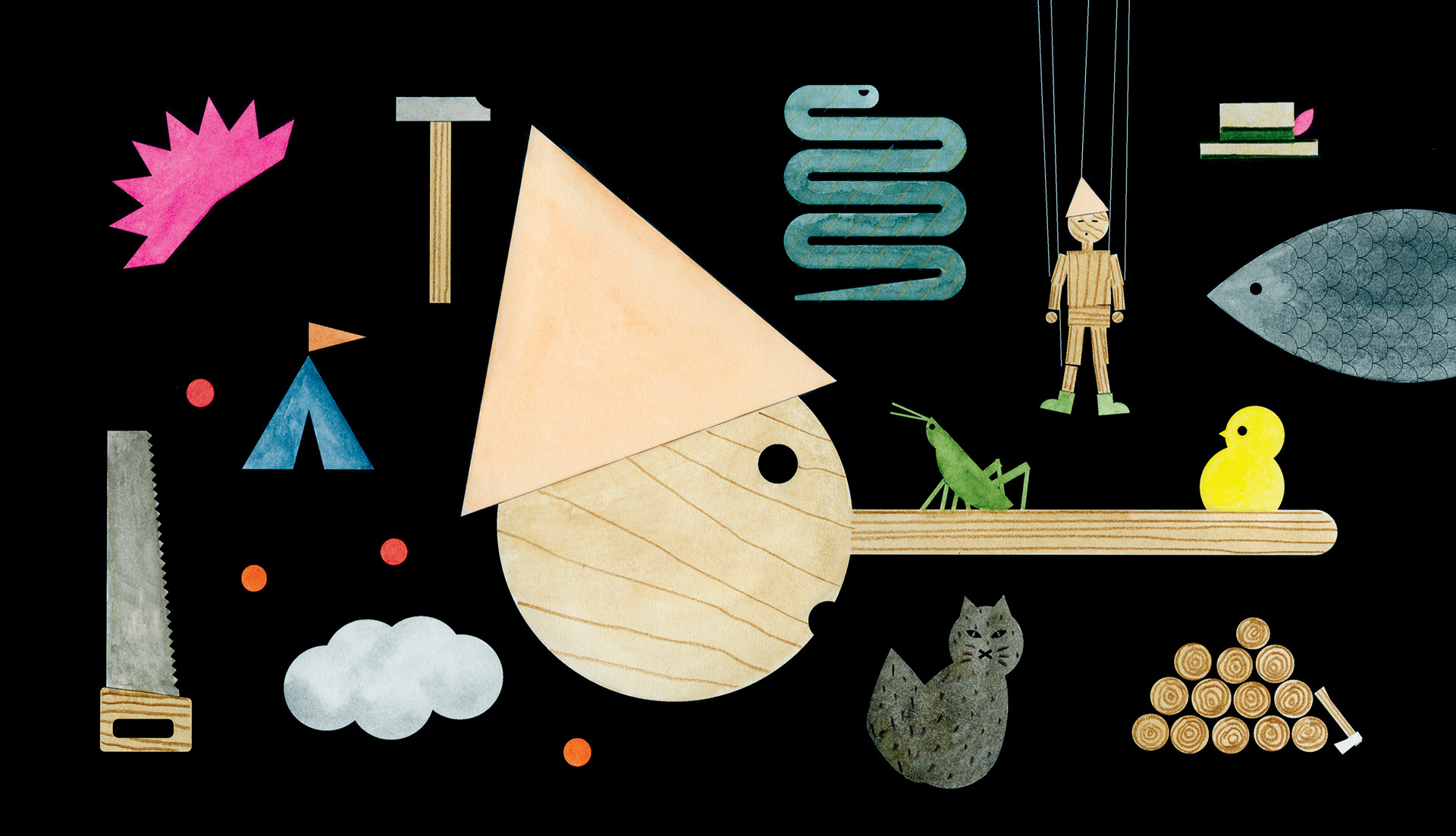
"Pinocchio is a machine
that wants to become a real boy"
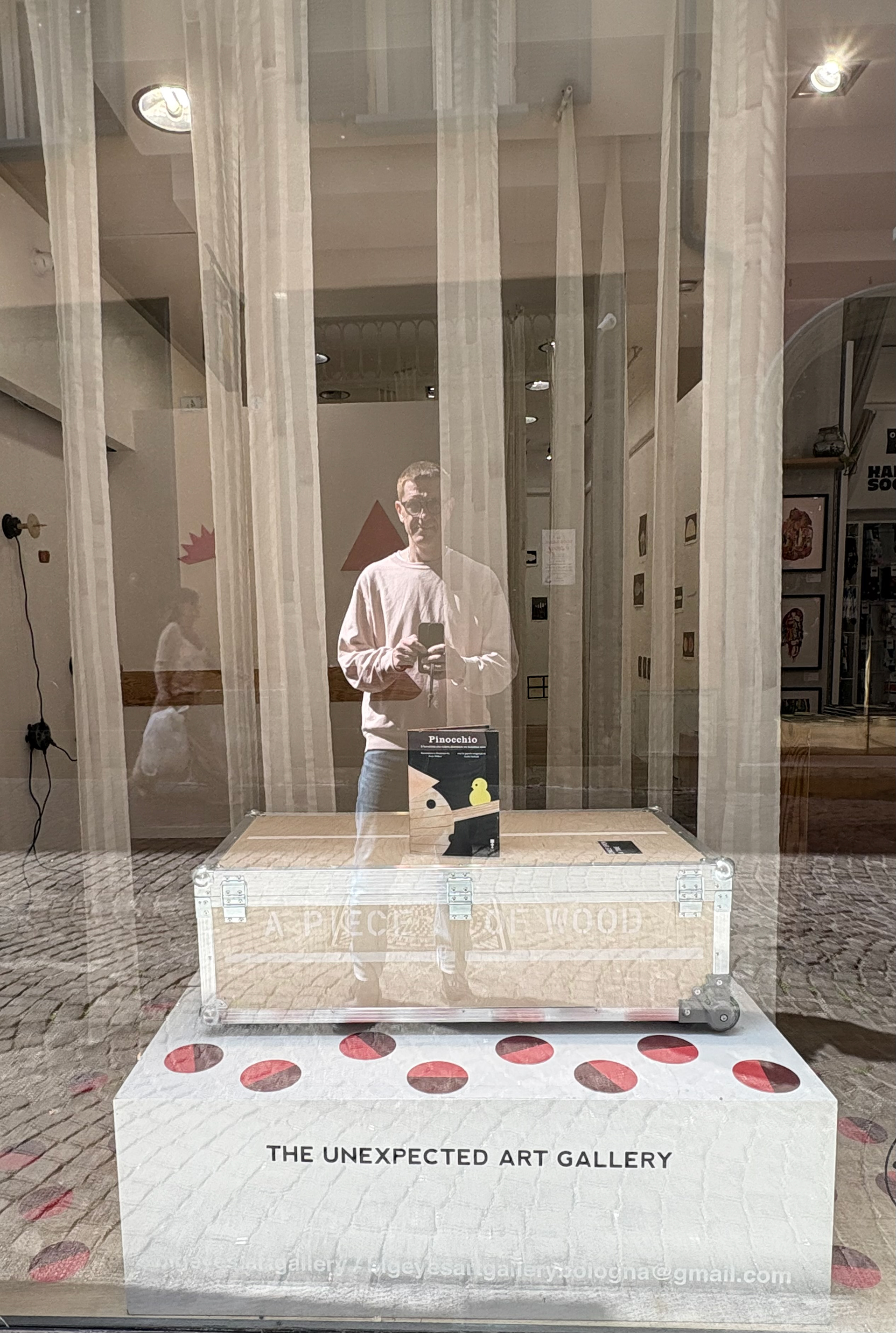
Exhibition at Big Eyes Gallery Bologna - April 2026
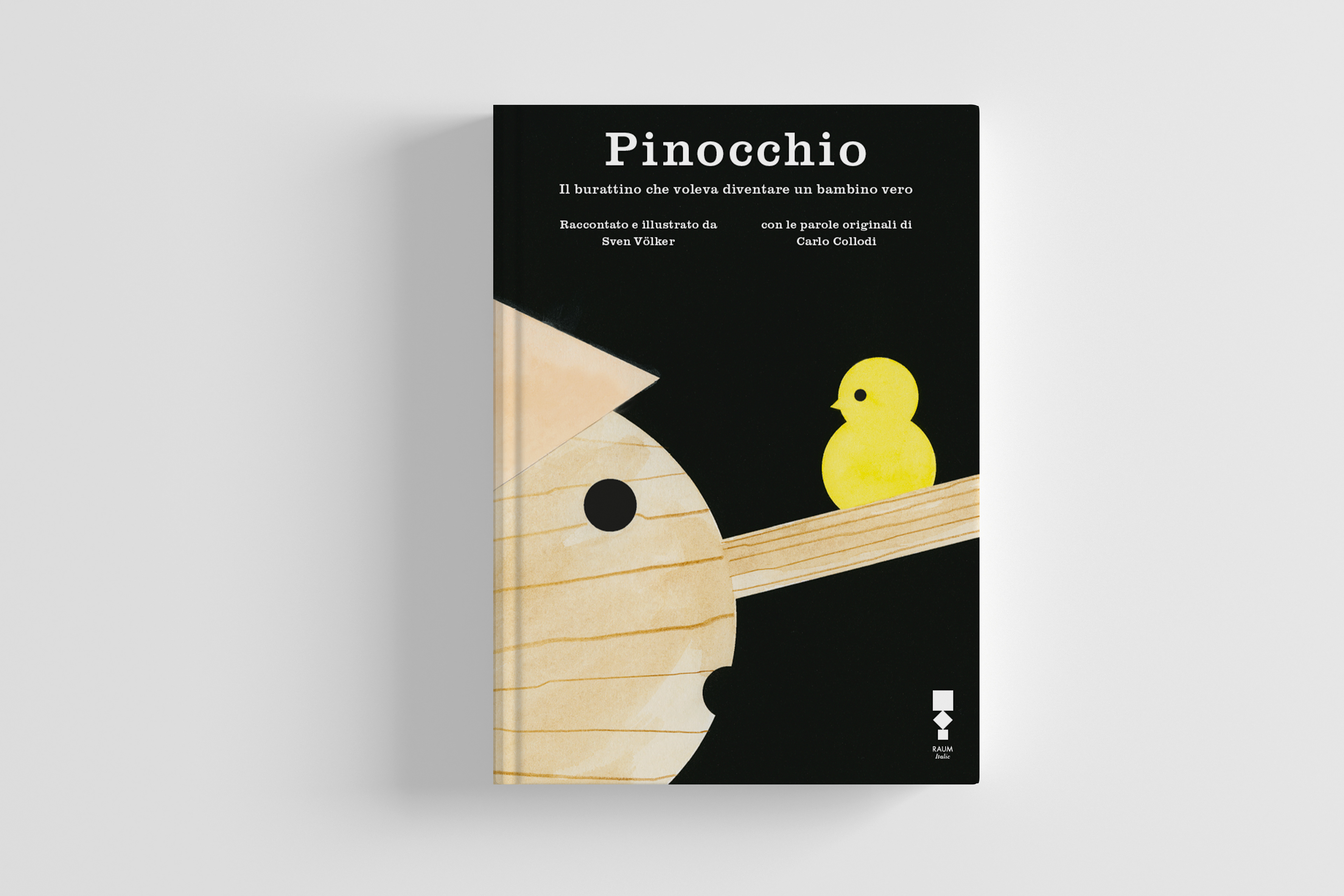
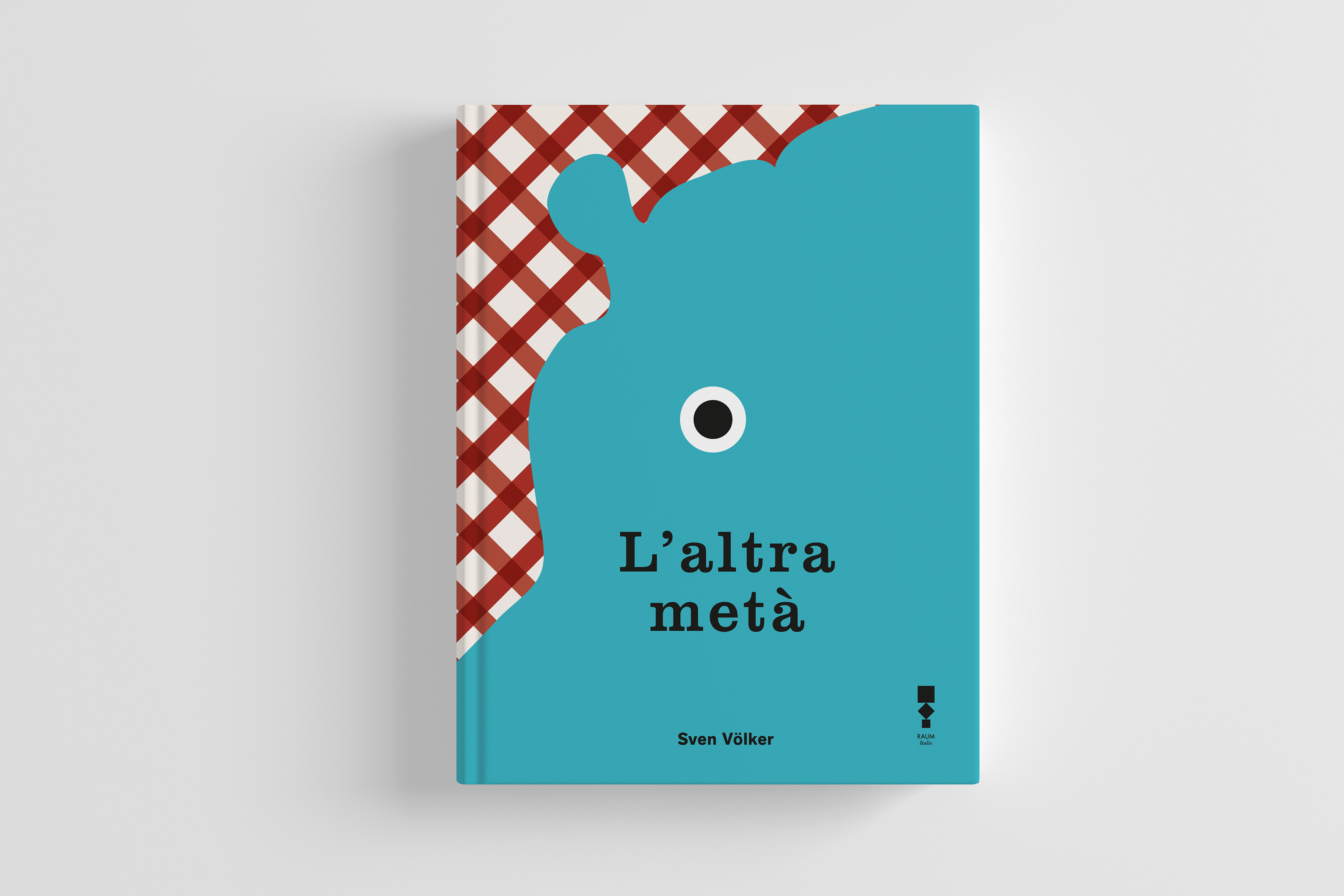
Pinocchio: The Puppet Who Wanted to Become a Real Child
by Sven Völker, based on the original texts by Carlo Collodi
dPictus 100 Outstanding Picturebooks 2026
Excellence Award at the Illustrators Exhibition 2026 in Bologna.
How did you come up with the idea of illustrating this old fairy tale?
We’re celebrating the 200th anniversary of Carlo Collodi’s birth this year, so it might be only natural to revisit it. But when I got my hands on the author’s complete text in an early, original translation, I was surprised. The story first appeared in 1881 as 36 episodes in a weekly newspaper. For one thing, it’s really dark, and that didn’t fit with my image of the story, which has been shaped by countless interpretations in film and comics—Disney foremost among them. Like many fairy tales, the text is often cruel and dark, but also very entertaining and full of twists and turns.
It’s a long story filled with little adventures, and you can tell that the main goal is to keep the reader engaged—which is why Pinocchio ends up completely out of breath on his journey, or rather, his escape. But if you set aside the individual adventures for a moment, there’s more to the story than the cliché of Pinocchio playing pranks and getting a long nose whenever he lies. Suddenly, it becomes clear that the real dilemma for Pinocchio is that he realizes he is a puppet, and so his desire to become a real boy grows ever stronger.
"It is both: a very contemporary story
and totally fallen out of time."
Do you also see a connection here to the current debate on artificial intelligence, digitalization, and automation?
Sure, that’s strikingly obvious. Geppetto takes a piece of dead wood and shapes it into a marionette, which immediately turns into an uncontrollable machine. The old man thought he could ‘control’ the marionette. Instead, Pinocchio breaks free from his creator and sets off on a journey of his own. But Pinocchio does not find happiness as a machine. Everyone he meets – and most of them are animals – says almost mockingly—“You’re not a real human at all; you’re a puppet.” It’s funny how animals seem to take it for granted that they’re superior to machines.
Of course, Collodi had no concept of the digital world that we experience everyday today. But when he wrote the story nearly a hundred and fifty years ago, Europe was in the midst of industrialization. The world of nature and craftsmanship was being replaced by a new world of machines and the quest for innovation. And then there’s this peculiar educational dimension, in which a restless and curious boy—Pinocchio—is supposed to learn to be well-behaved, diligent, and polite. It’s really hard not to become cynical here, and the only strategy I could come up with was to completely detach myself from that aspect, which carries so much weight in almost all fairy tales. I’m really only interested in this one wish that Pinocchio has: I want to become a real boy.
You “remixed” the text—what does that approach mean exactly?
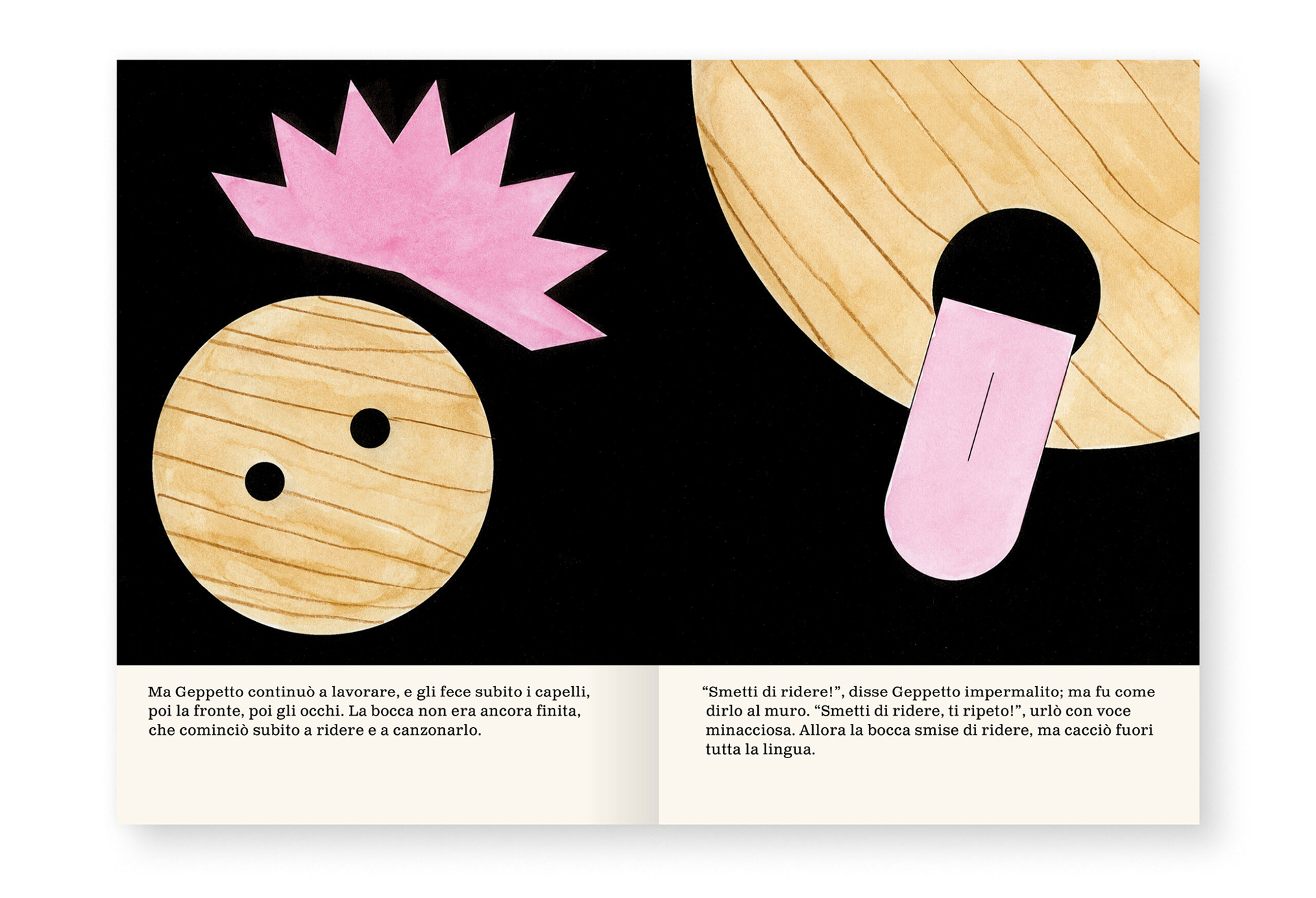
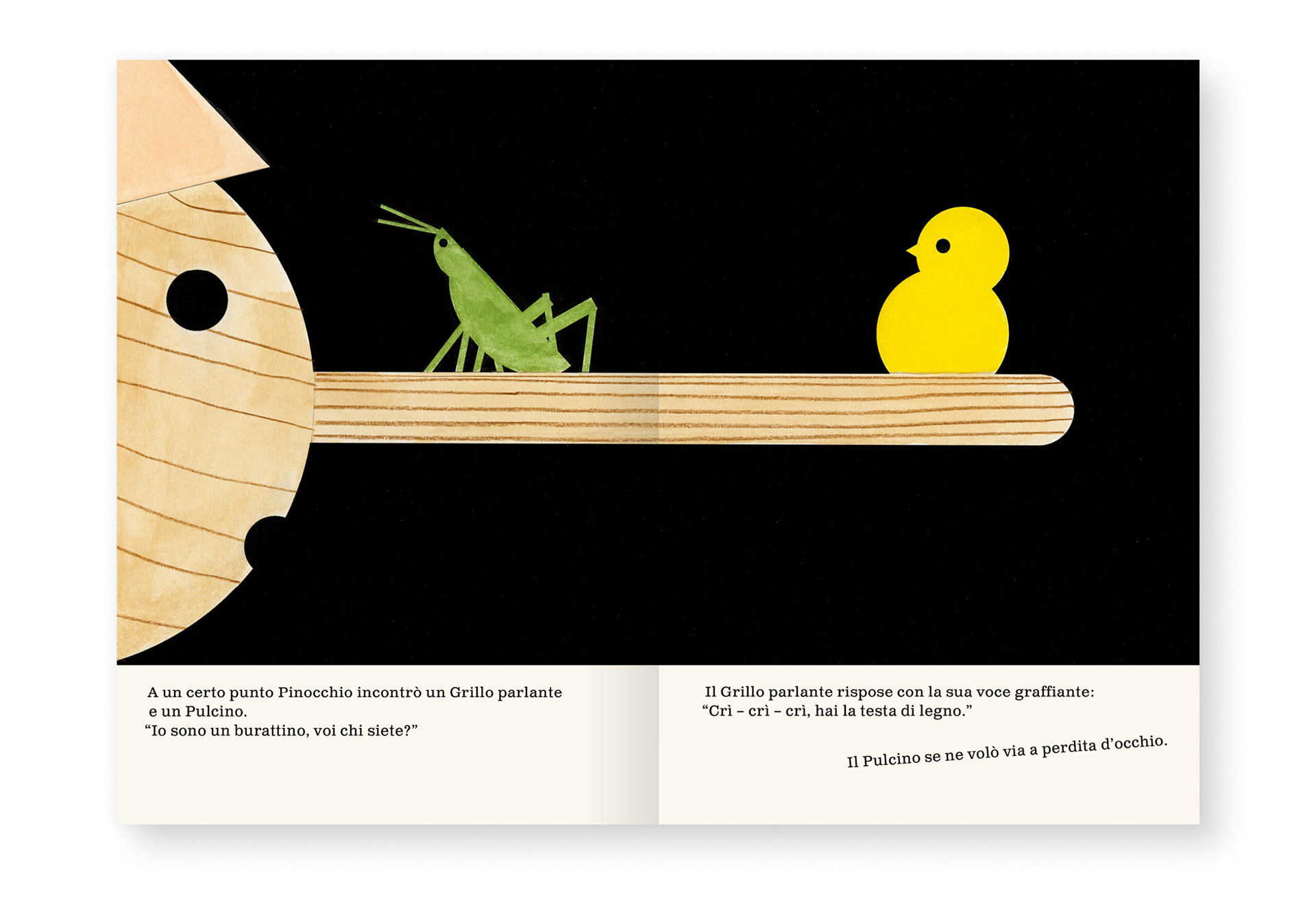
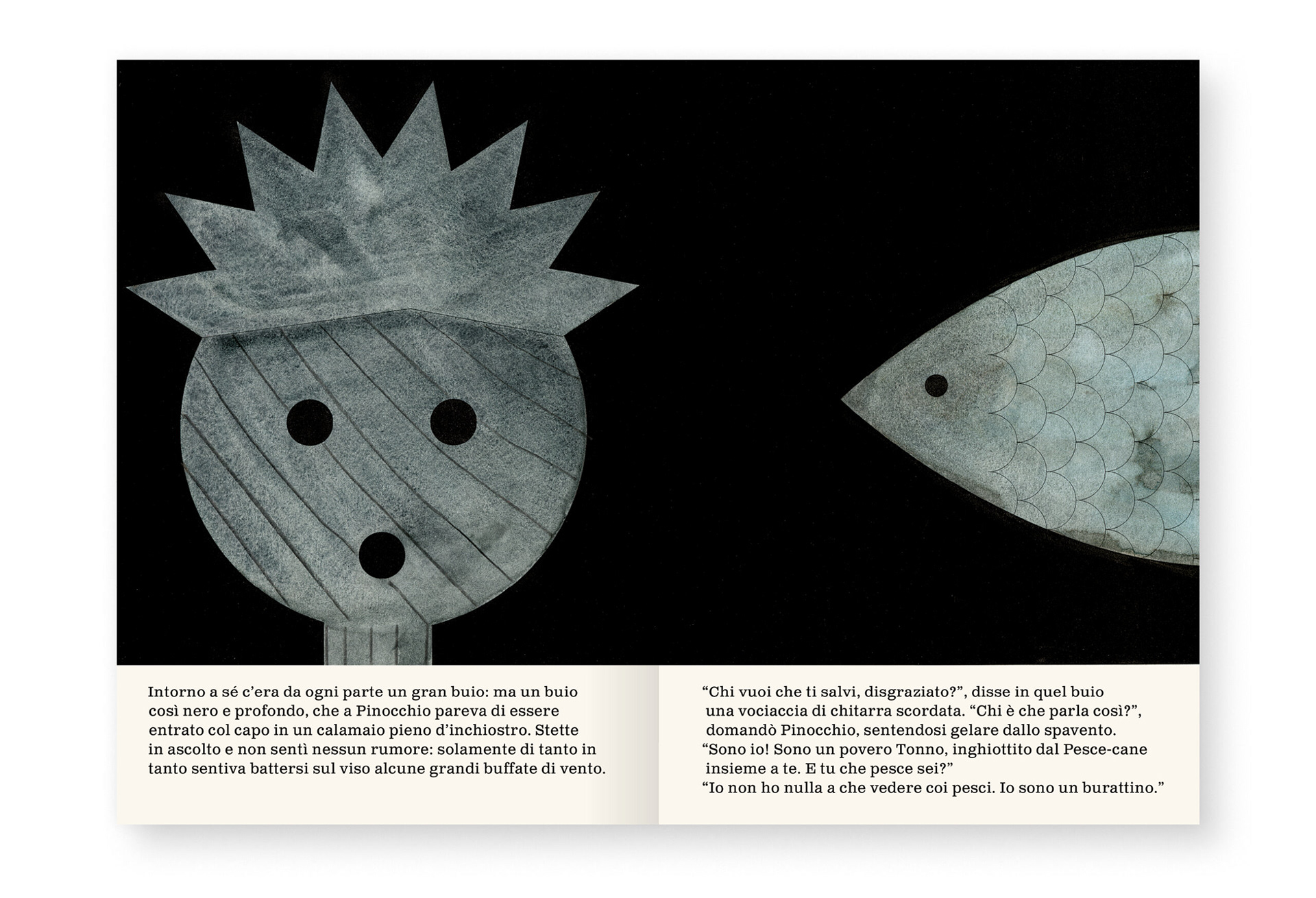
I didn’t want to retell the story myself by using new words and modern language. I was much more interested in the original text and its unwieldiness, its gloominess—the fact that it sometimes seems out of step with the times. So I literally cut it apart completely and put it back together again. So it’s made up of lots and lots of little snippets of text that have been put together in a new way, some of them just a single word long. And since it is supposed to be a picture book and not an epic fairy tale with 36 chapters, I also cut it down very, very significantly. That’s what I love about picture books anyway—the stories are often very short—more like a poem—but their ideas can be big, and so can their dreams and wishes.
"Once upon a time, there was a piece of wood"
How did you illustrate the pictures? Has your style evolved since your earlier books?
Yes, I experimented a lot and for a long time. With every book, I also work on my style and develop it a little further. I’m not interested in repeating myself. Instead, I try to be a new version of myself each time by tweaking the tools I have at my disposal. It reminds me a bit of playing the drums, which I used to do. Back then, I’d also changed the elements of my drum kit slightly for every band and every musical style.
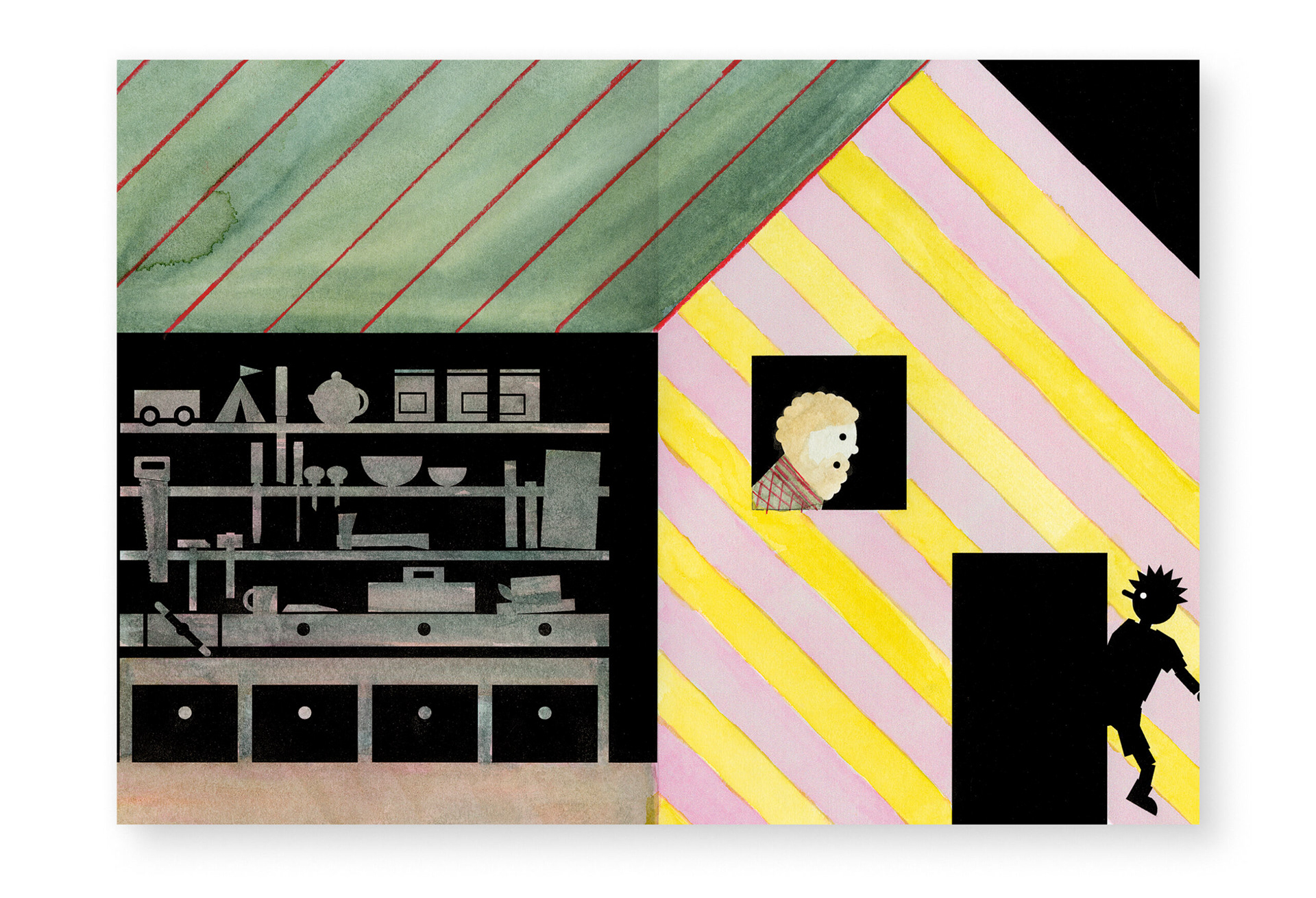
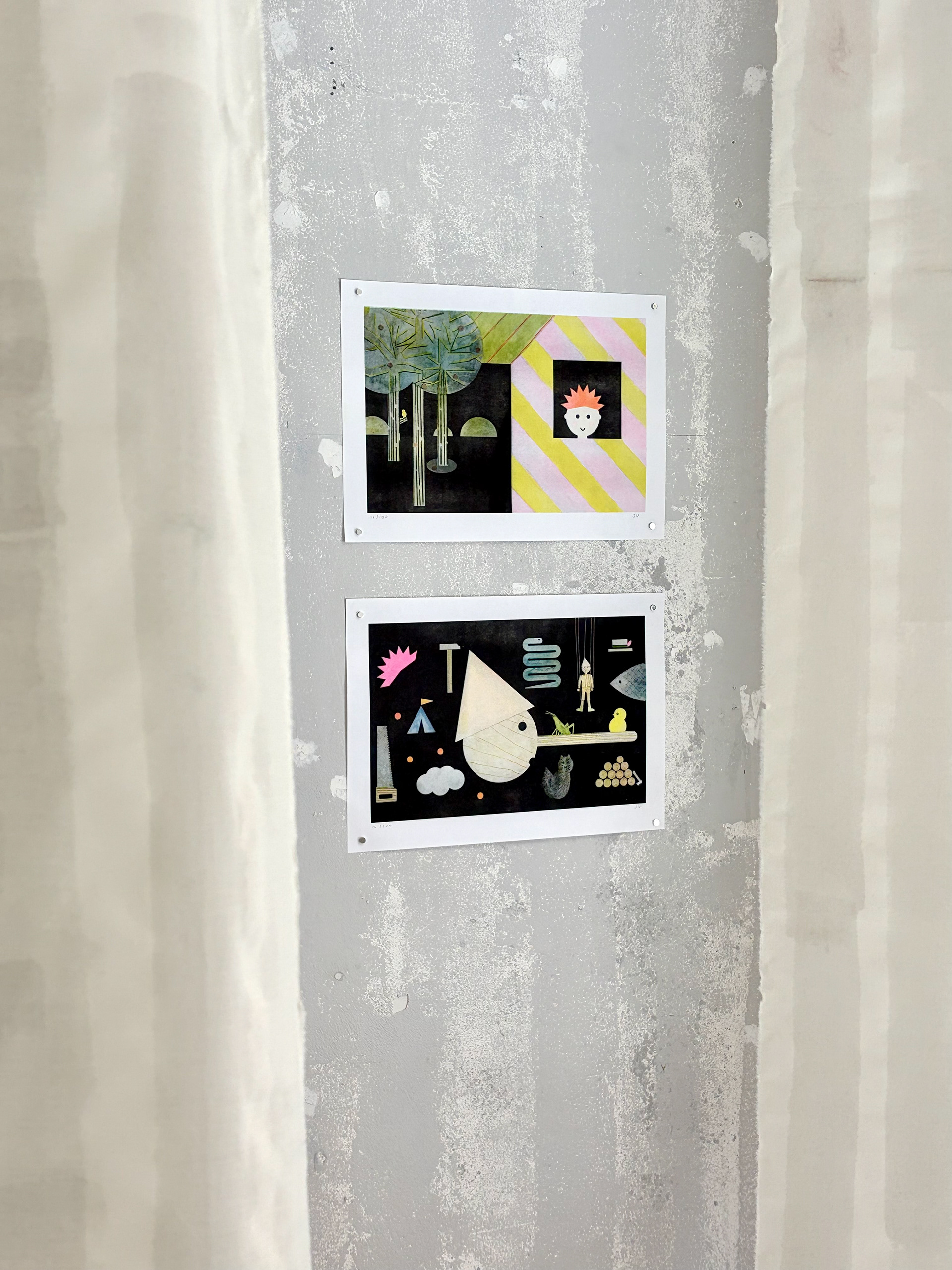
I had the idea of creating the black areas digitally on the computer as paper-cut like silhouettes, then printing them out, and then adding another, analogue layer using watercolours and coloured pencils. Each part of the process on its own is incomplete and leaves plenty of room for errors and chance. When the digital graphic layer and the hand-drawn analogue layer come together, that’s when things get interesting. I’ve never worked like this before, and I’ve hardly seen any other illustrators who work this way either. Over 10 years ago now, I embarked on a wonderful journey of visual experiments with my first picture book, and I haven’t found a single day boring since.
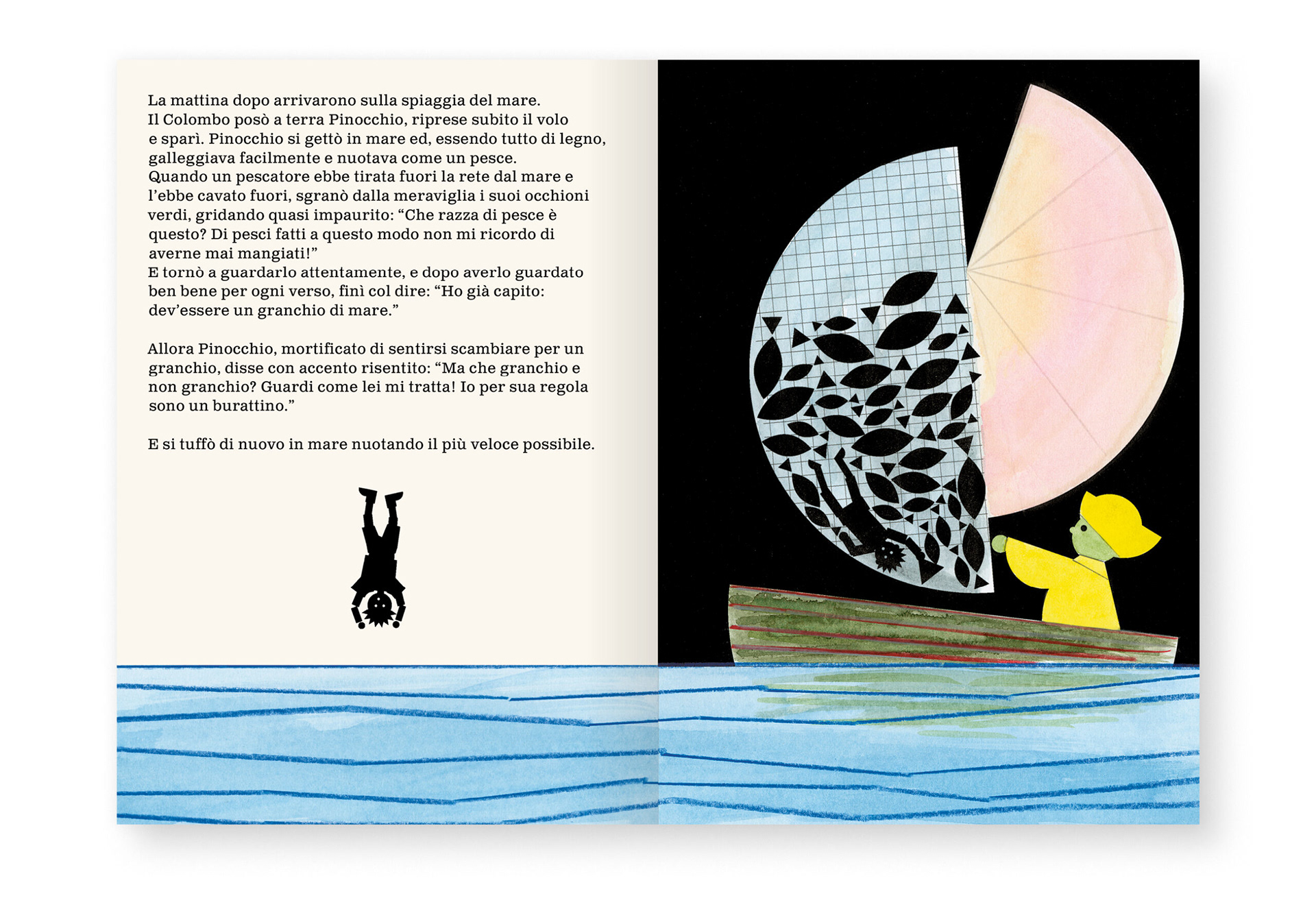
This is now your second picture book to be published first in Italian by Raum Italic Edizioni. Do you speak Italian yourself?
No, not yet, unfortunately, but I’m learning it at the moment. I’m currently building a small artists studio in Italy and am determined to spend more time in this wonderful country. I’m sure I’ll never really master the language enough to express myself fully as an author. But I have my pictures, and they’re always at least half the book. The world of picture books is a very international one. Even books that aren’t global bestsellers are often published in several languages across very different continents. I find it a lovely idea that books can be translated so easily and adapted to a different culture and language. Because, after all, they are always a combination of pictures and text.
Raum Italic is a small, highly dedicated publishing house in Berlin that publishes books exclusively in Italian. They work closely with the legendary Corraini Publishers in Italy and are committed to its great tradition, which includes Bruno Munari and Enzo Mari—both of whom are my heroes—and this combination makes our collaboration almost magical. I am very happy that we have now been able to produce two books together.
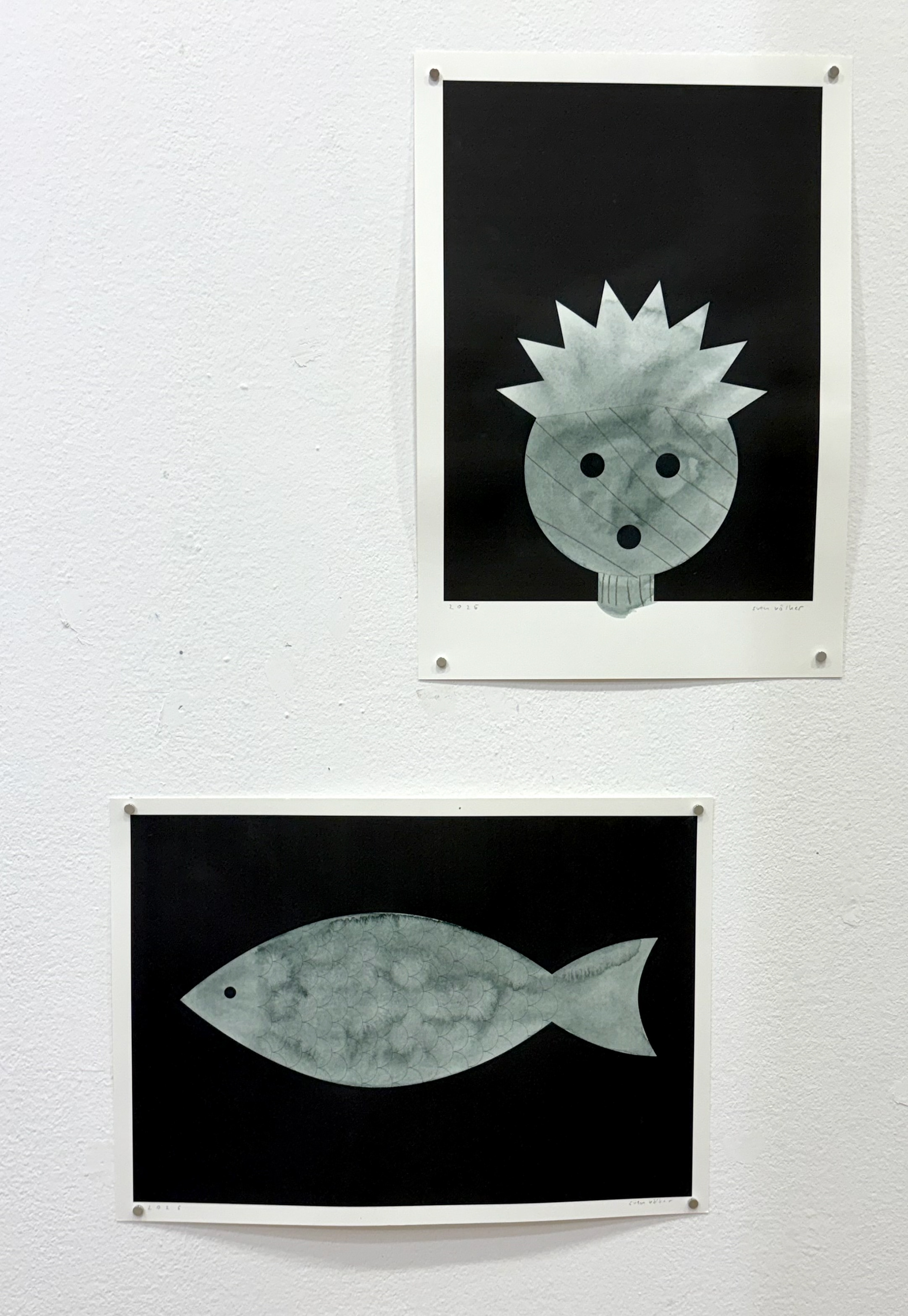
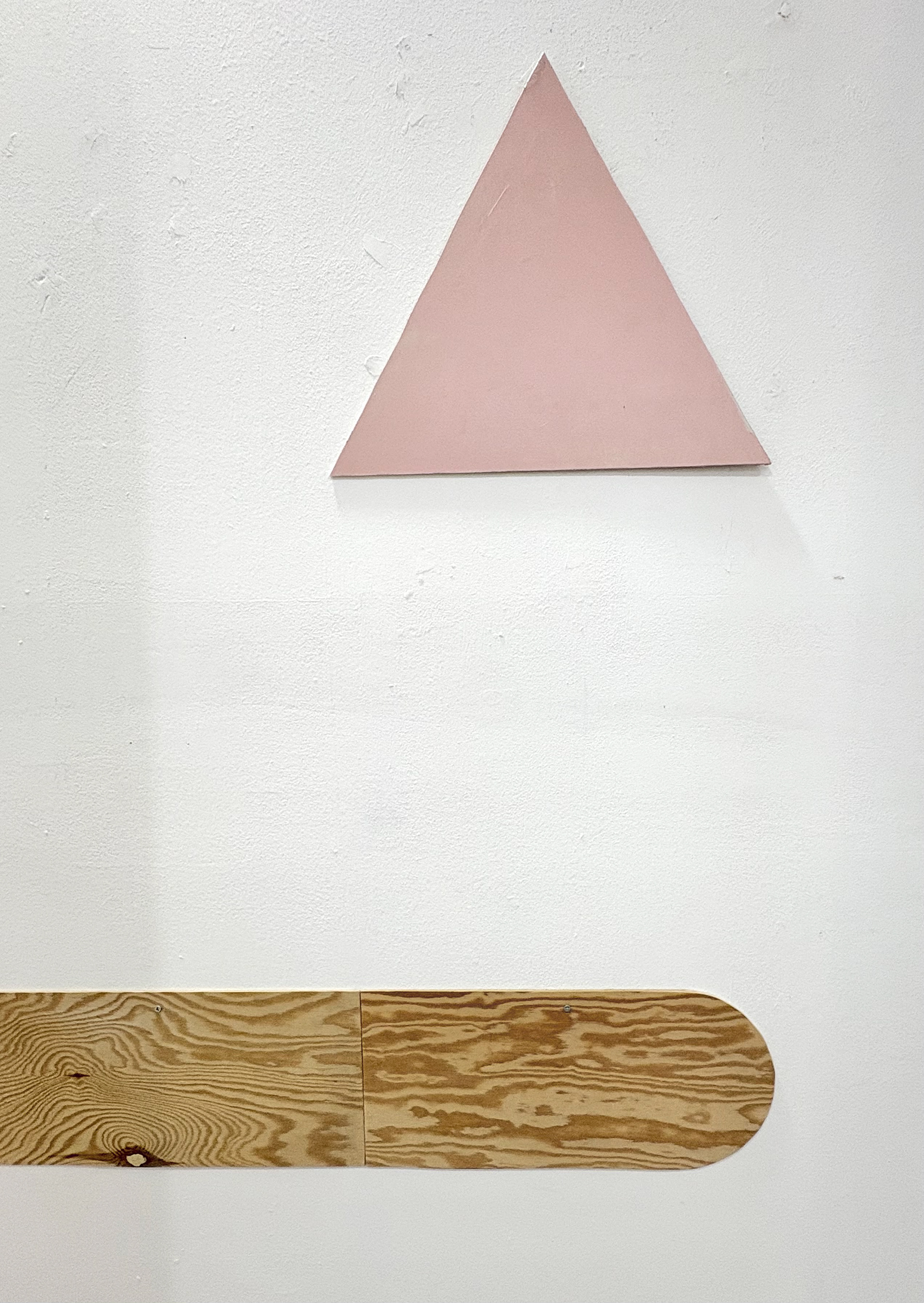
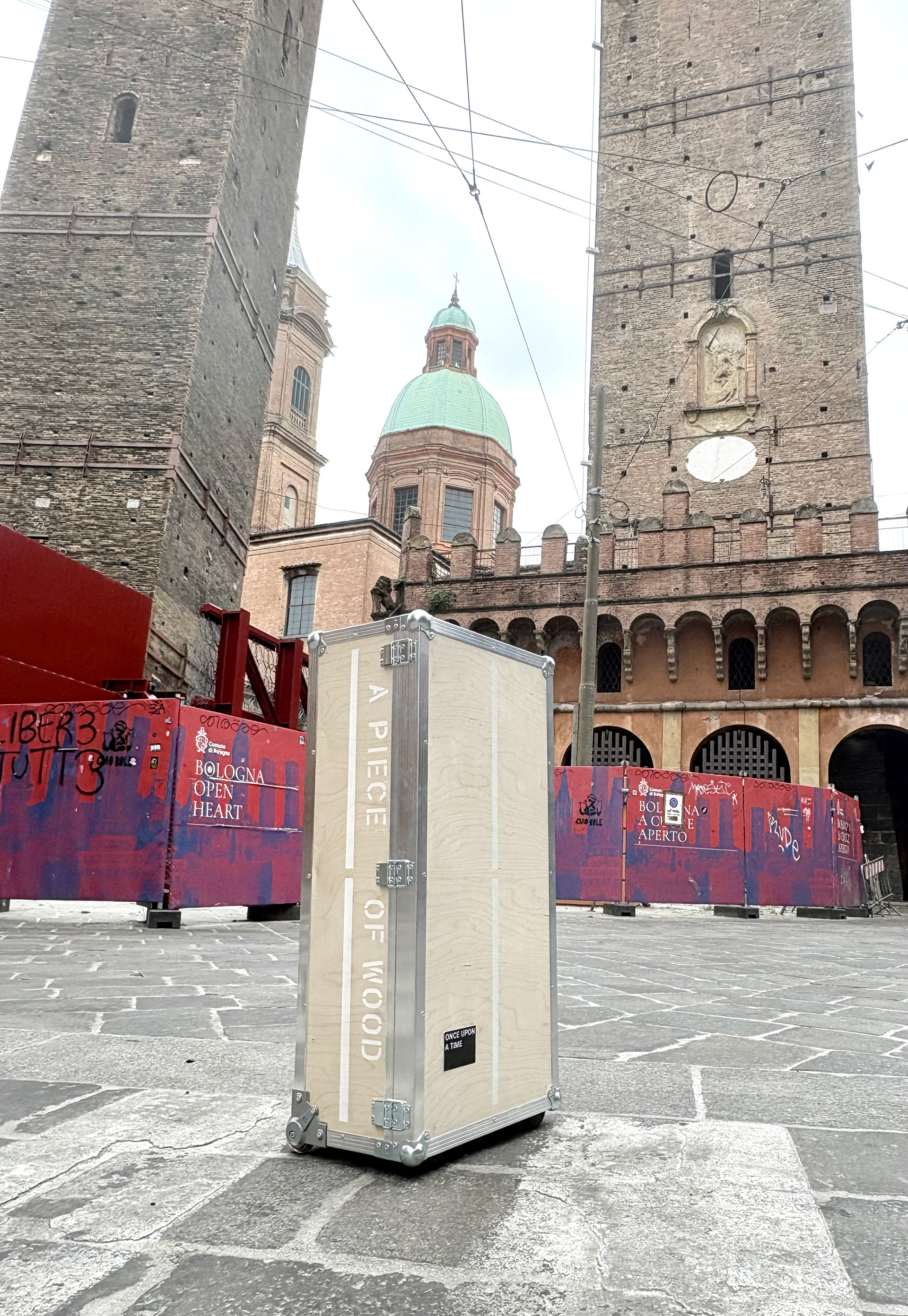
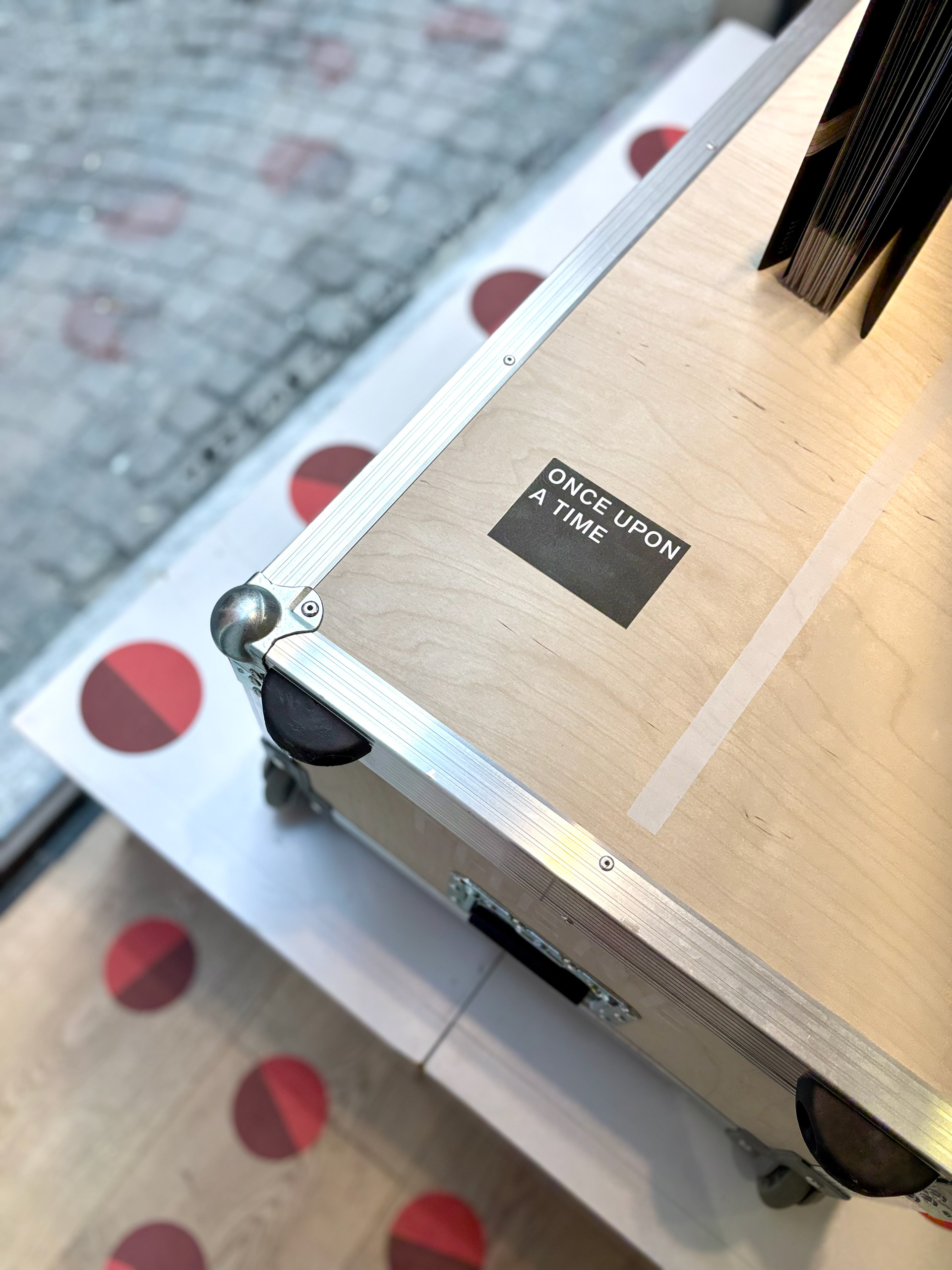
Pinocchio - Exhibition Travel Case
Birch plywood and aluminium profiles, acrylic paint
100 x 50 x 30 cm
What role do the exhibition and the scenography play in the development of your picture stories?
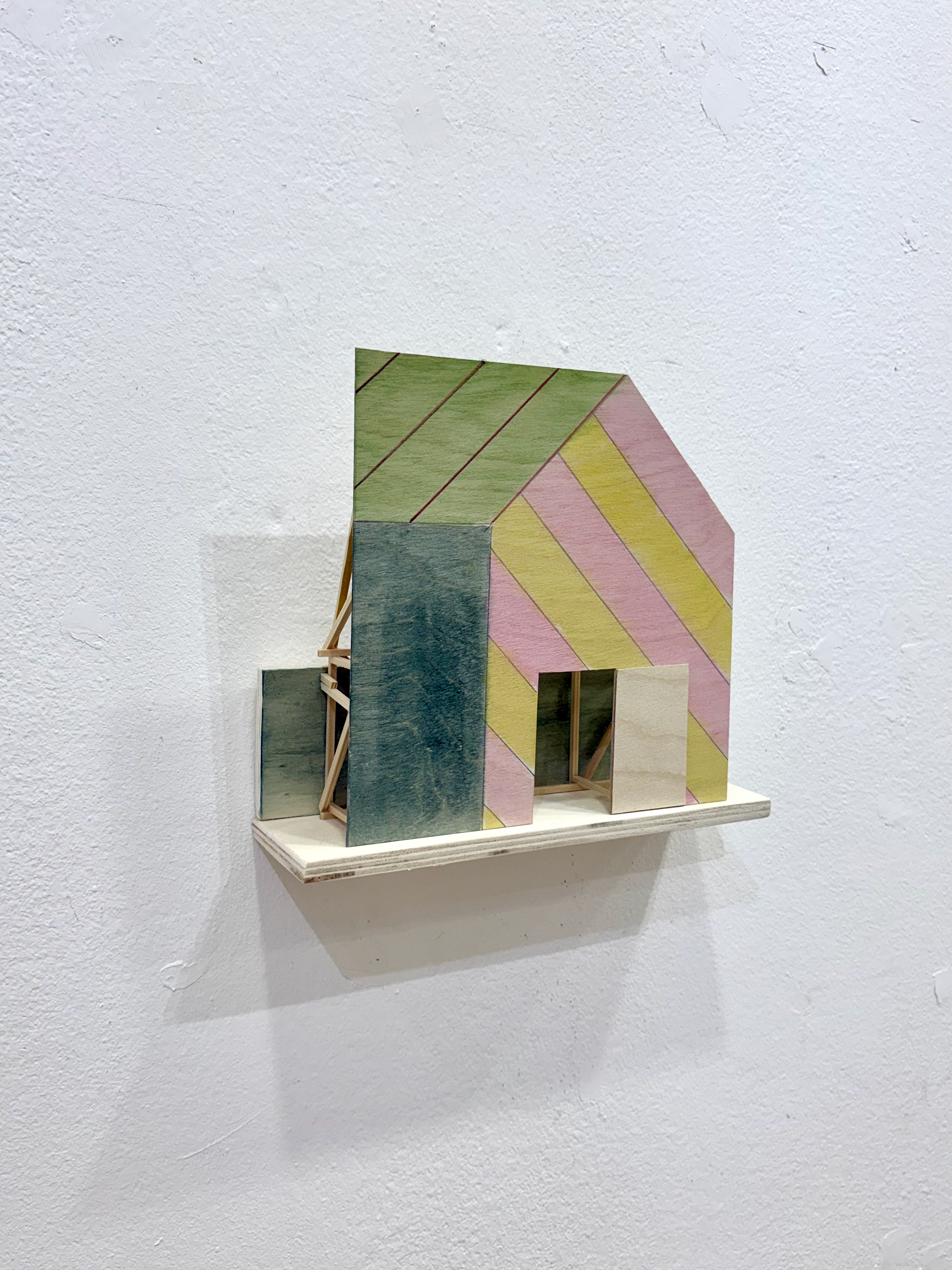
With all my books, I’ve always spent a long time experimenting with other media as well. It’s not that I make a preliminary sketch for an illustration; rather, I tinker with something here or build something physical there. In this way, I gradually develop forms, colour palettes and ideas. I’ve always been interested in sound and light art, textile art, sculpture and painting, and have always done all of these things in a very modest way. I just haven’t shown them yet very often, or only in different contexts.
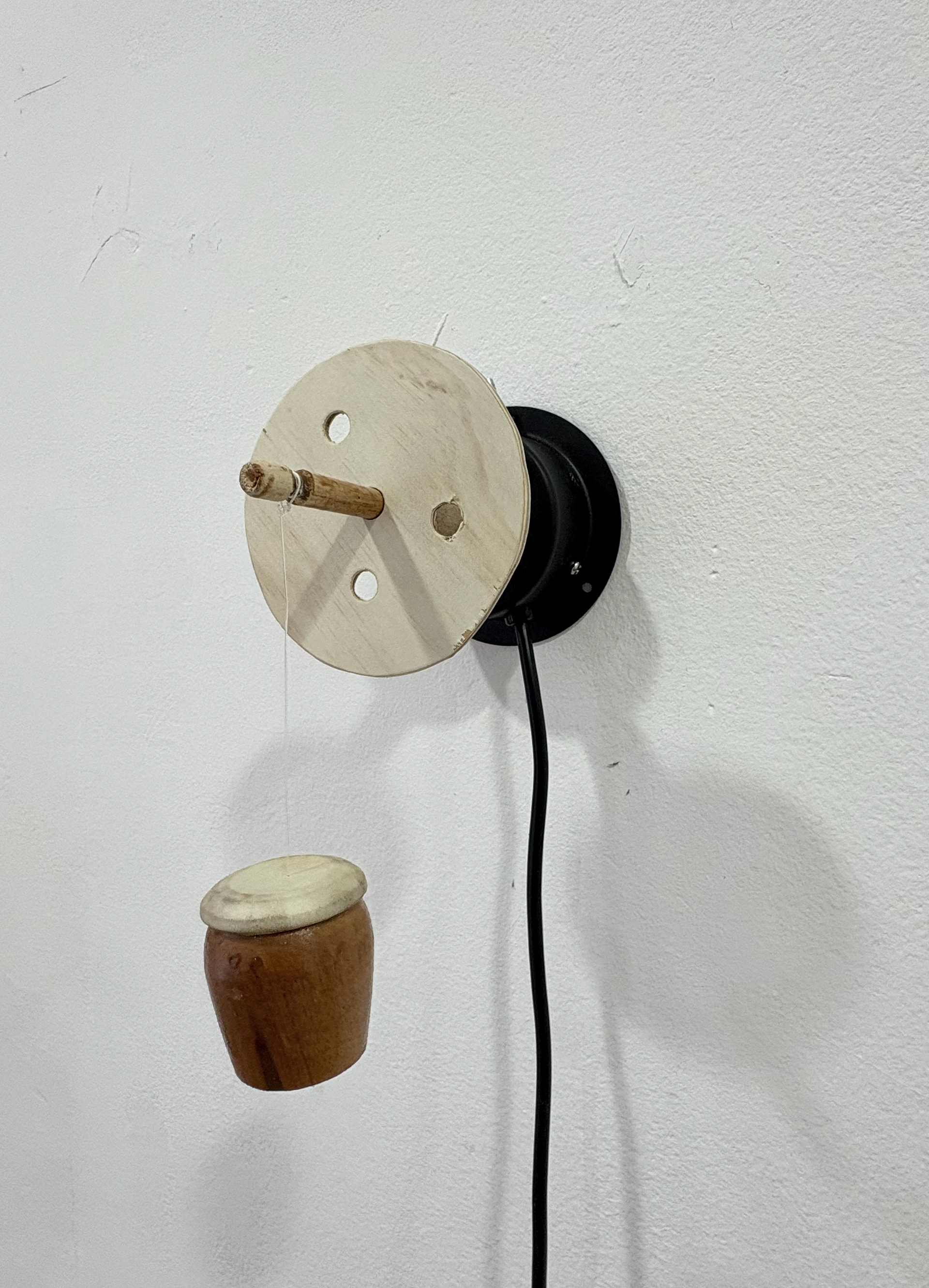
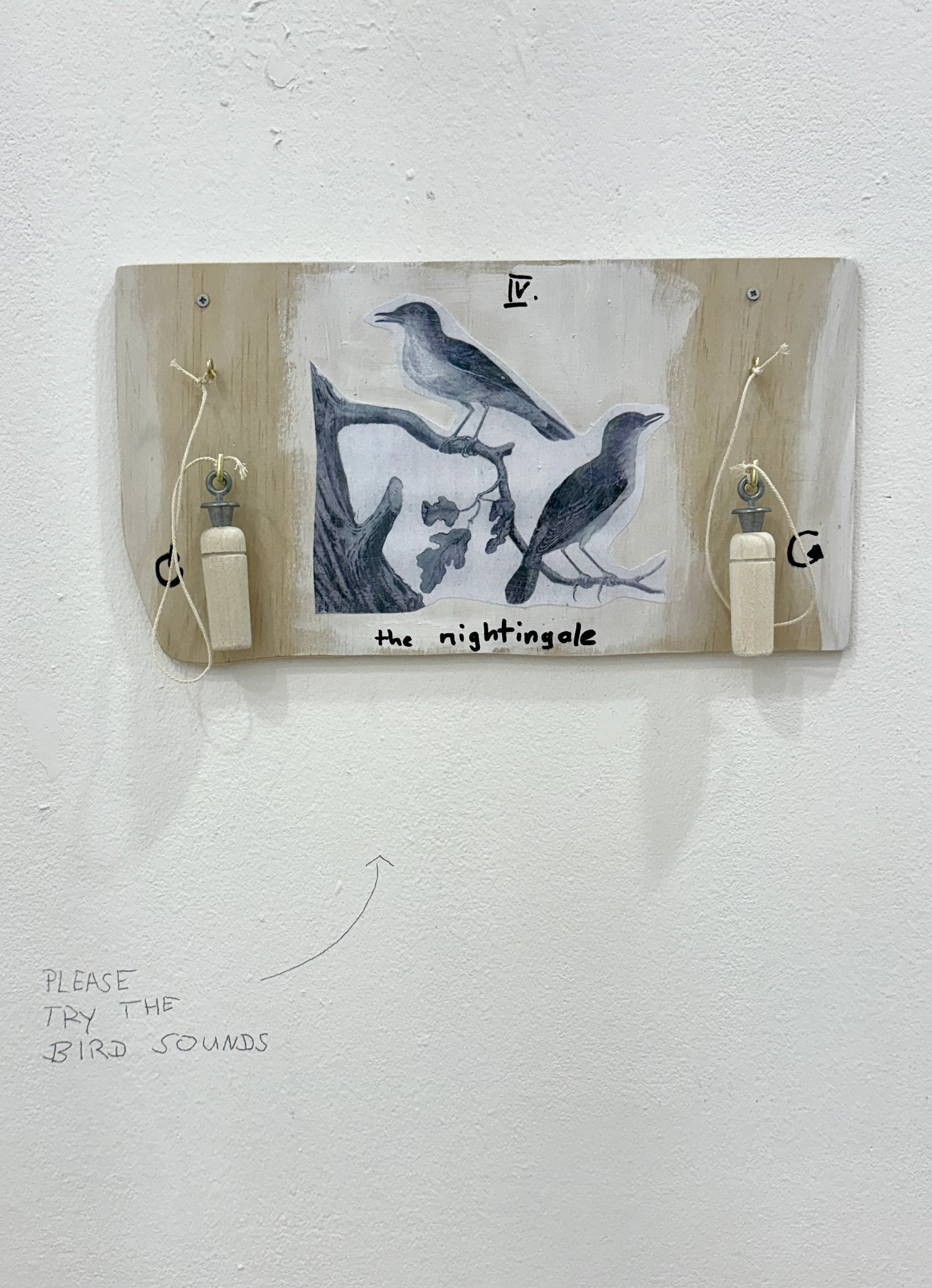
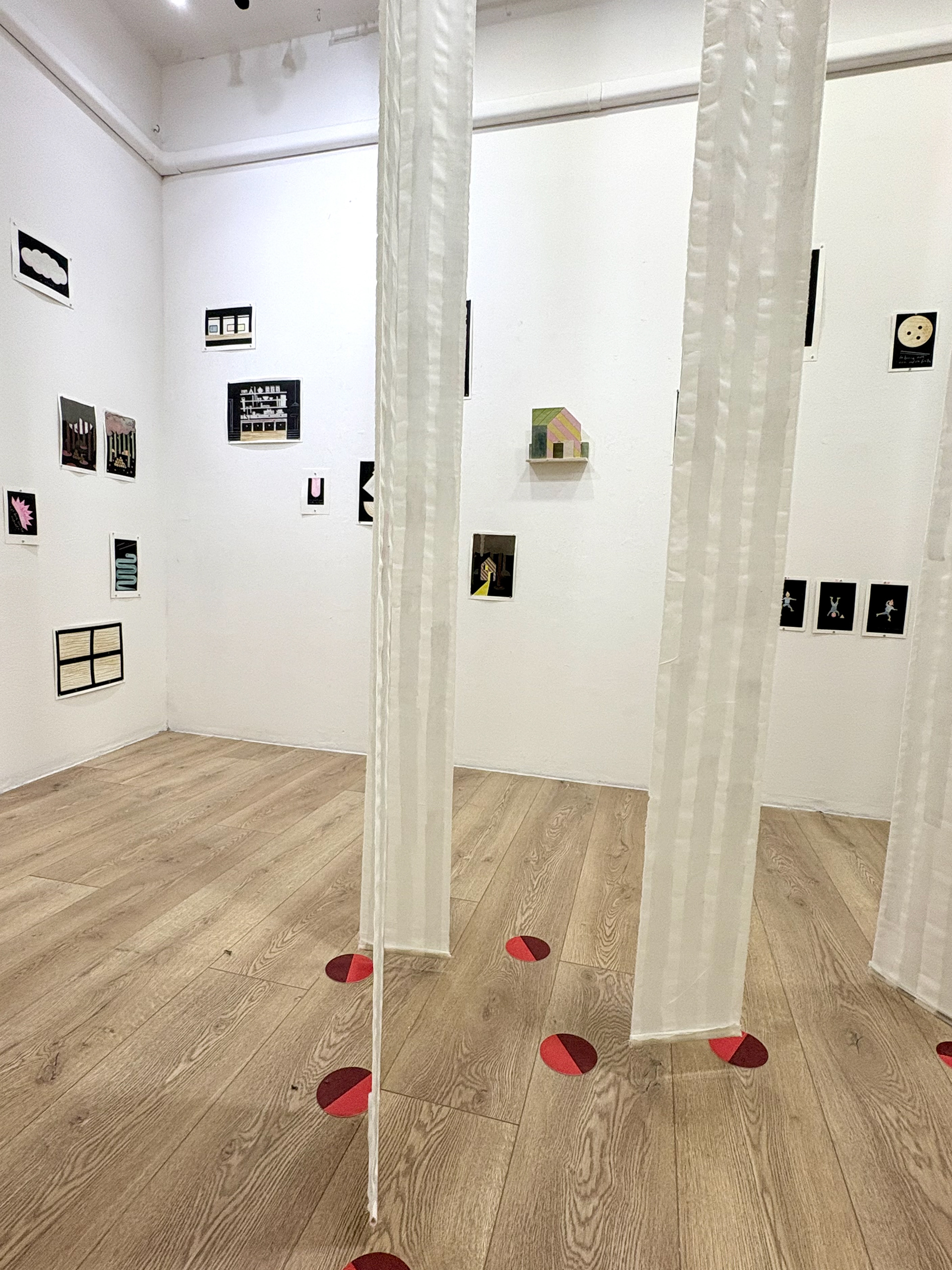
I now realise that I want to bring these worlds together. I find it absolutely thrilling to imagine how a book might function as an exhibition, and how I might liberate it from its pages between two covers. With my book "The Museum of Shapes", I recently took over an 8-by-8-metre space at the Museum of Concrete Art in Ingolstadt. Now I’m trying it again with "Pinocchio". In a gallery space, visitors can walk through Pinocchio’s forest and hear strange screeching and scratching sounds, and they can imitate sounds of nighingales or that of a cuckoo themselves with little wooden machines and even recreate the hammering of a woodpecker.
What would you like to do next?
I’d like to develop an exhibition experience and a children’s picture book as one thing. Both should appeal to children and adults in equal measure. I love the idea that, through picture books, we adults can also recapture a little bit of our own childhood. That’s why I always make my books for myself at first.
Oh yes, and at the moment I’m rediscovering the theatre all over again. I’m really enjoying going to the theatre in Berlin once or twice a week to see all sorts of plays. The actors, the set design, the staging, the costumes. The interplay of so many individual elements fascinates me.
more picture books
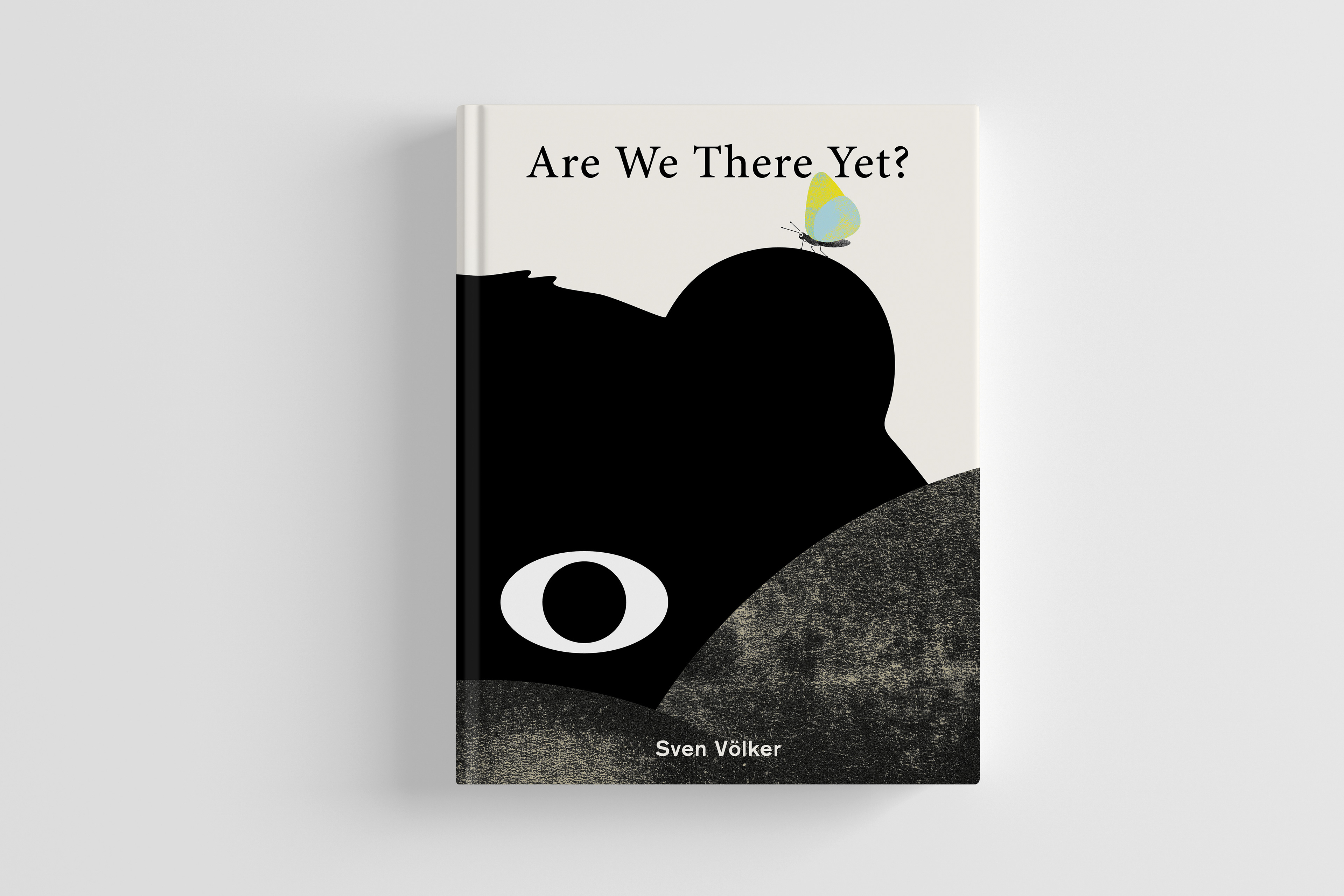
New Book coming Spring 2023
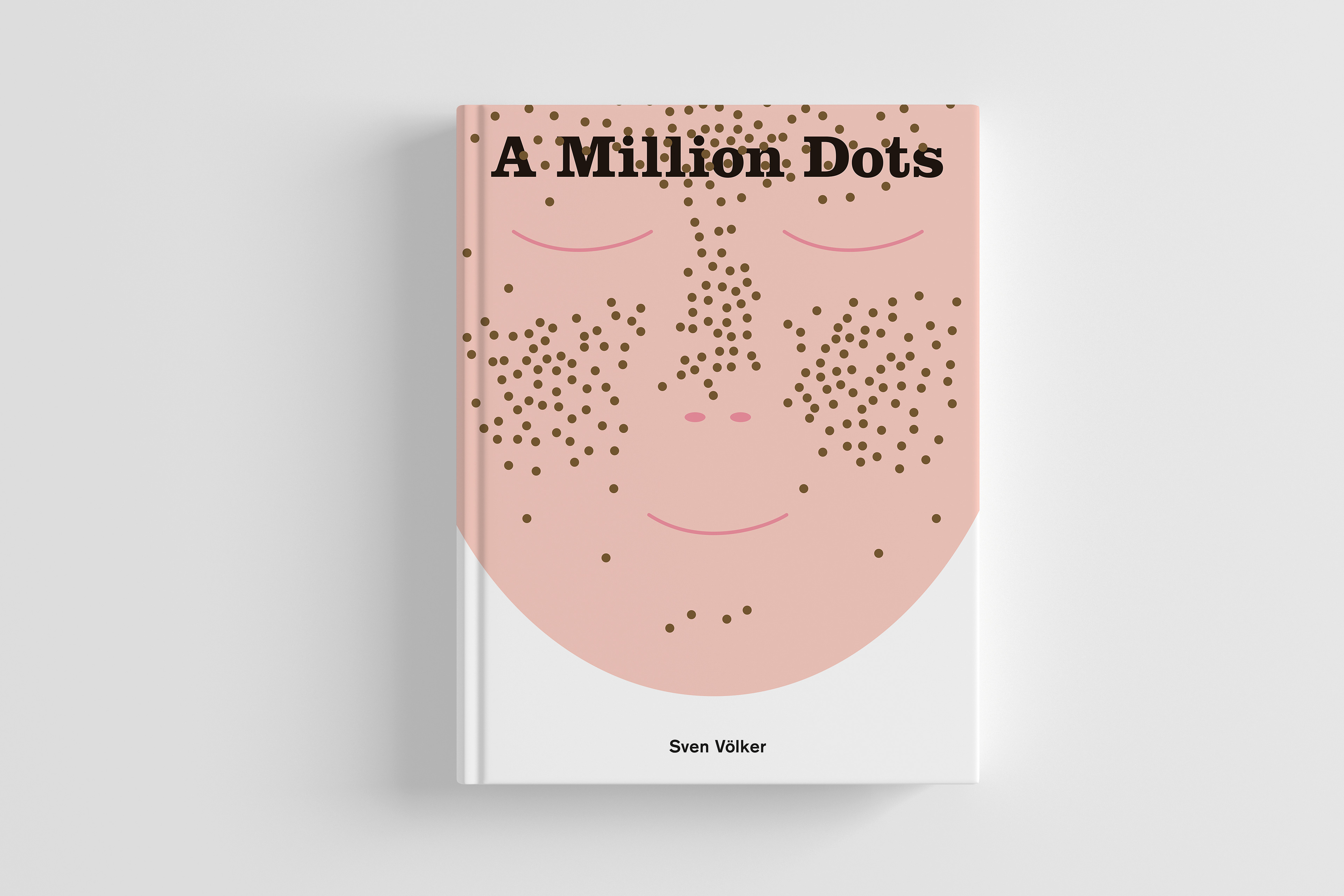
Winner of New York TImes Best Illustrated Children's Books 2019
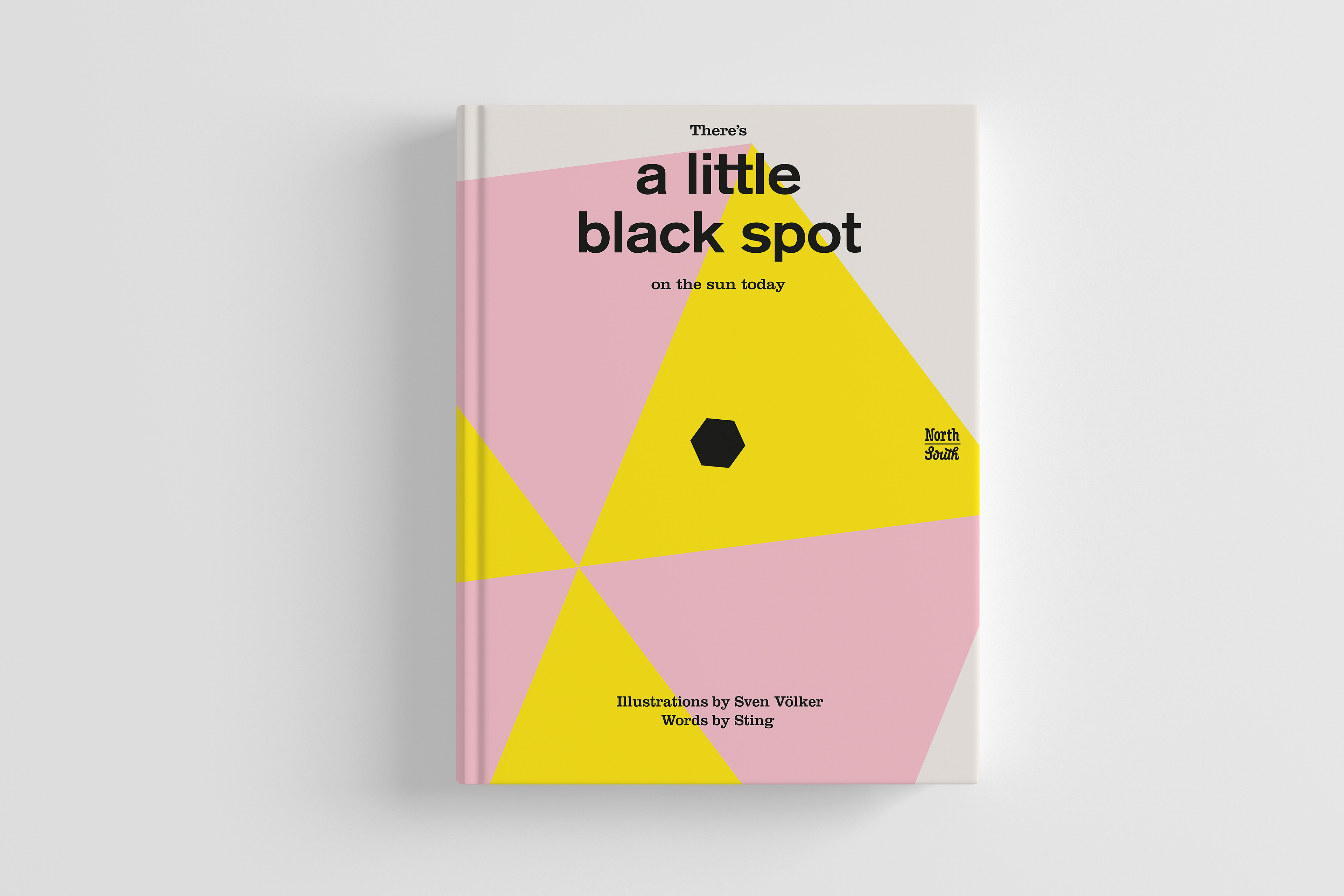
Based on a text written by Sting
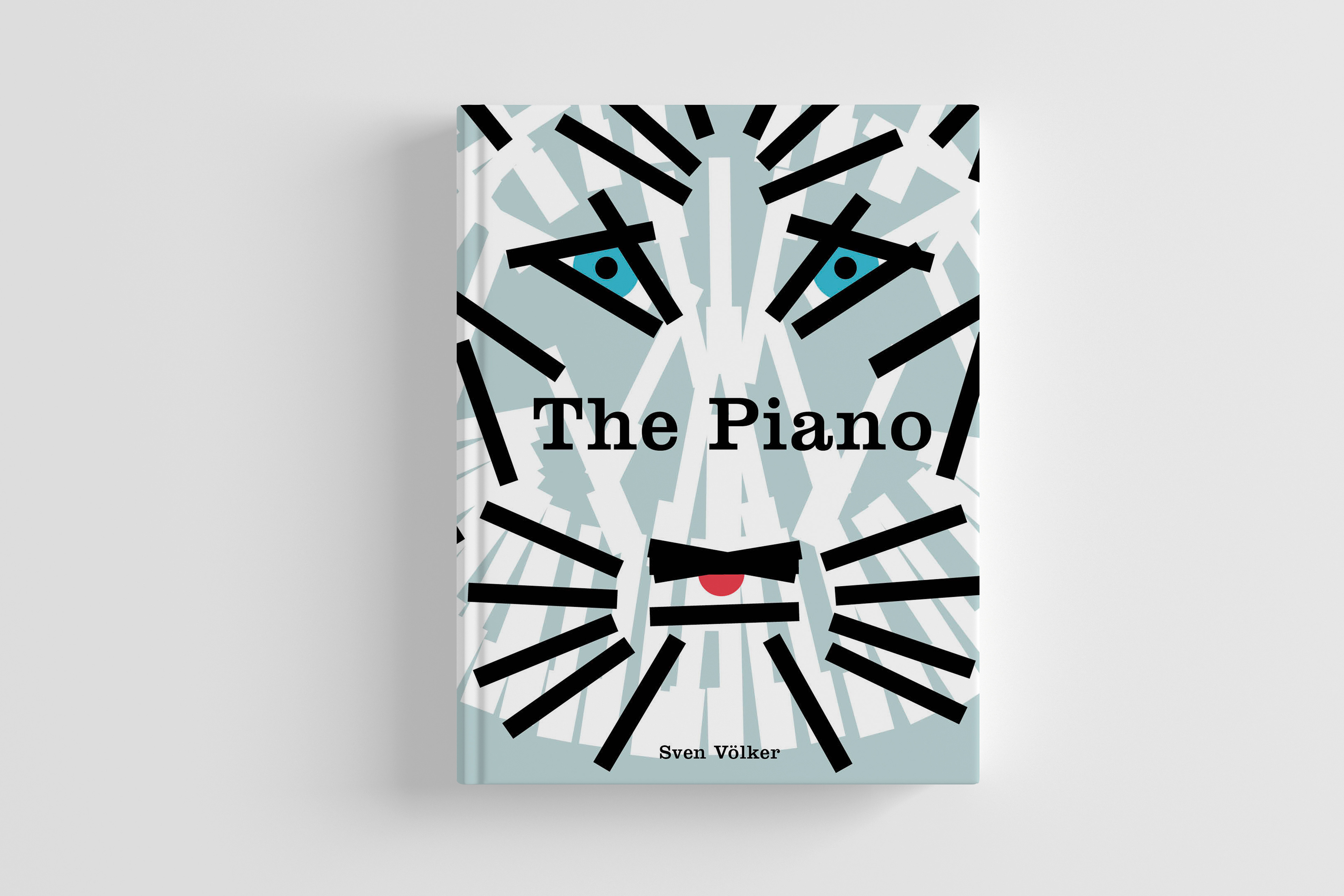
The Piano
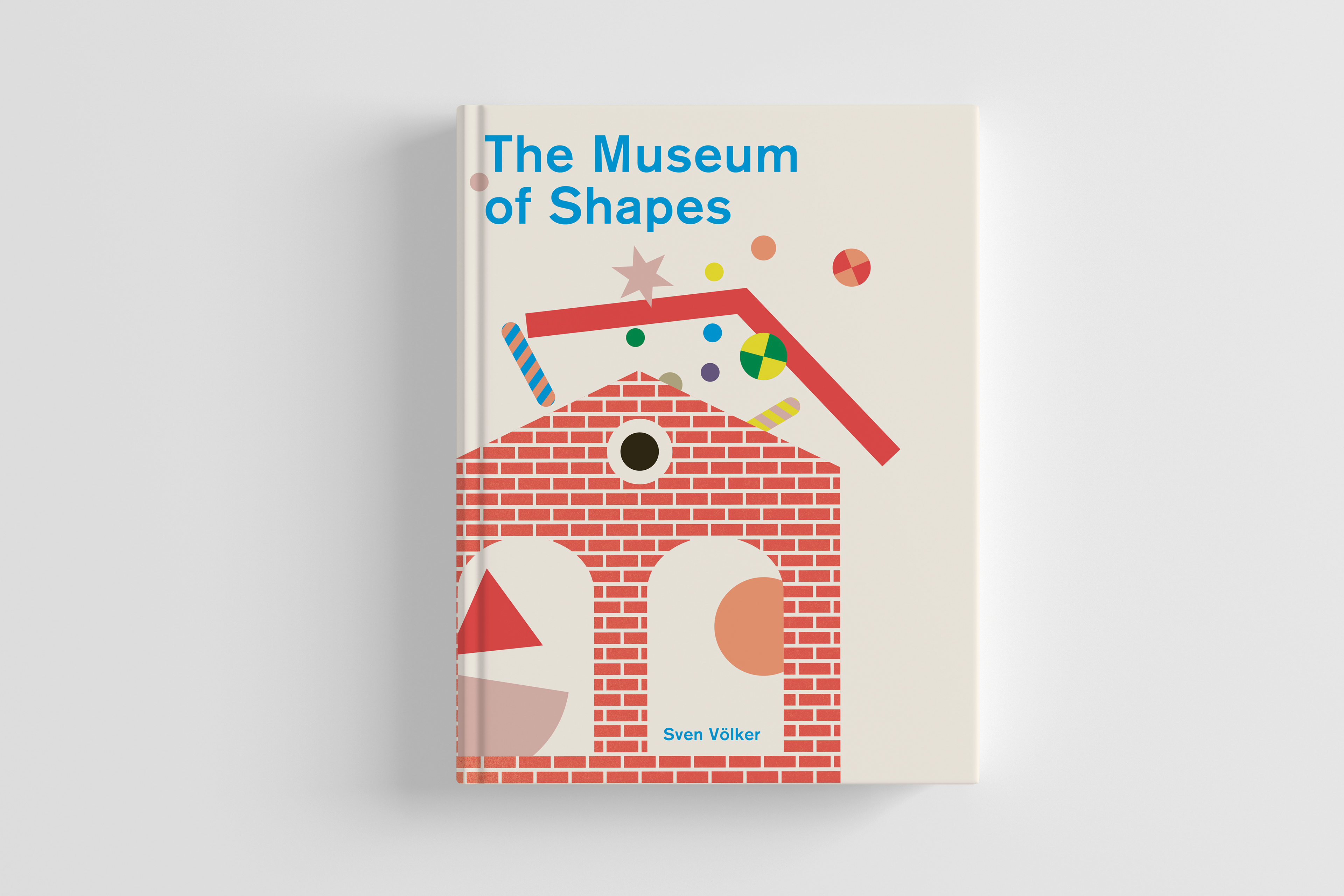
The Museum of Shapes